Headlines

ARCOMadrid 2022

February 25, 2022


ARCO Madrid contemporary art fair celebrates in 2022 the 40th anniversary it couldn't celebrate last year –due to COVID restrictions– with 185 galleries from 30 countries and a specially curated programme to reflect on the past and future of the fair. This comes in addition to the regular sections for young galleries and Latin American art, and a general programme with 159 national and international galleries.

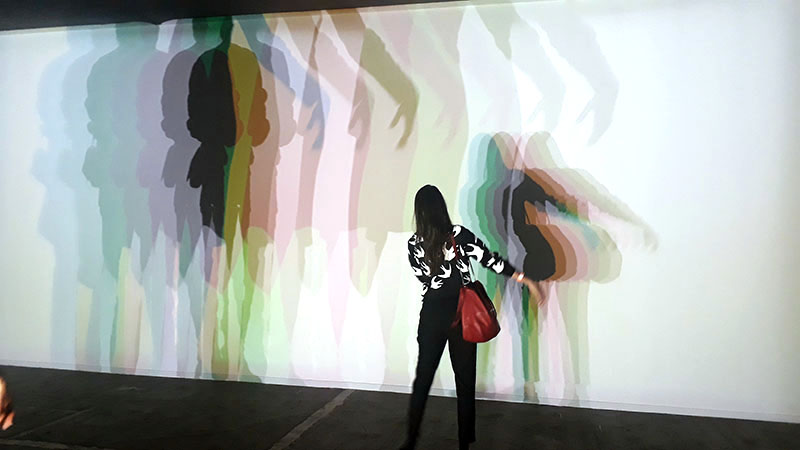
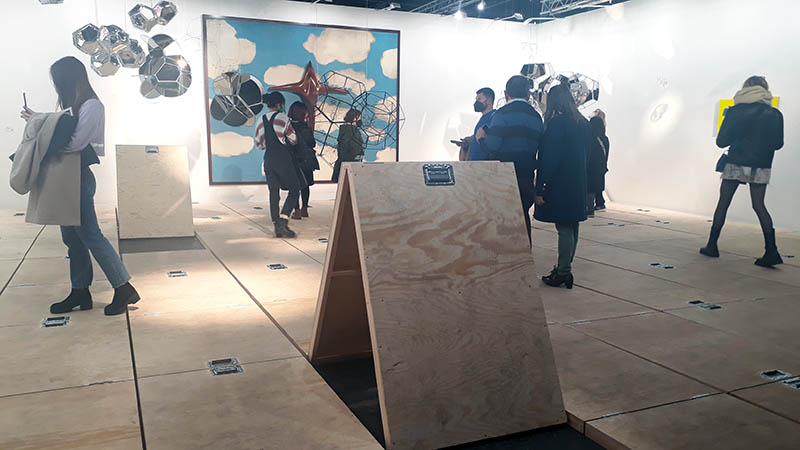
The General Programme has seen some fun this year with a few galleries featuring site-specific artworks that required visitors' engagement. The Berlin-based Neugerriemschneider gallery has presented two such artworks: Your Accountability of Presence, an installation by Olafur Eliasson that projects shadows of visitors in a wide spectrum of colours, and Falha by Brazilian artist Renata Lucas consisting of a folding floor with modular plywood panels that can be retracted. Eliasson's installation projects beautiful colours and shapes on the wall when there are people in the room but it interestingly shows no colours when the room is empty. 


Olafur Eliasson, Your Accountability of Presence, 2022 | A shared project by Neugerriemschneider Berlin and Elvira González Madrid


Renata Lucas, Falha, 2003/2022; Tomas Saraceno, NY Vir, 2018; Jorge Pardo, Untitled, 2015 | Neugerriemschneider Berlin

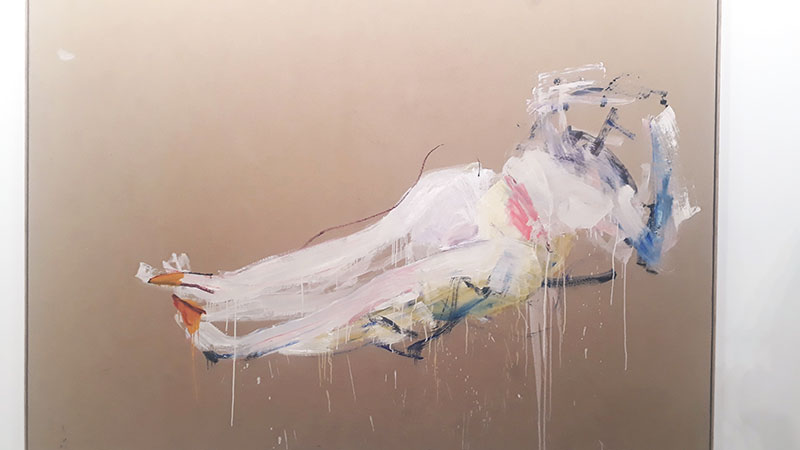
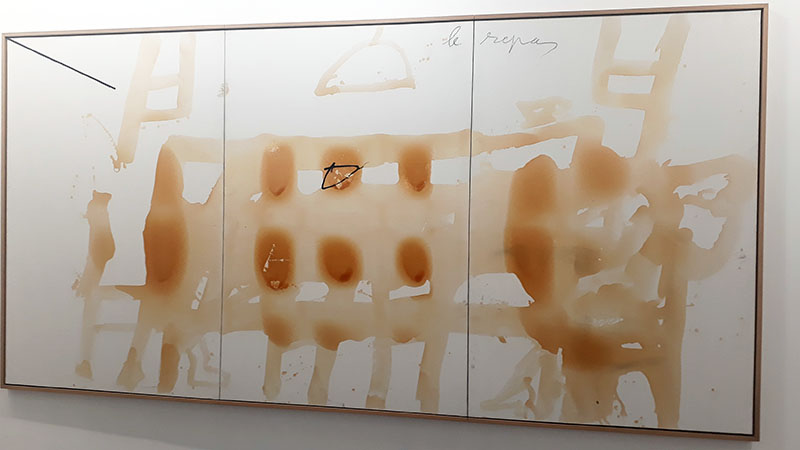
There were some extraordinary artworks in the General Programme including large-scale paintings by Martha Jungwirth (b. 1940) on Goya's notorious maja; a three-part painting by Antoni Tàpies (b. 1923) and a recent installation by Christian Boltanski (b. 1944) who died last year.

Martha Jungwirth, Untitled (Maja I), 2021 | Thadaeus Ropac Paris


Antoni Tàpies, Le Repas, 1984 | Galerie Lelong Paris

Christian Boltanski, Petites Ombres, 2021 | Galería Albarrán Bourdais Madrid


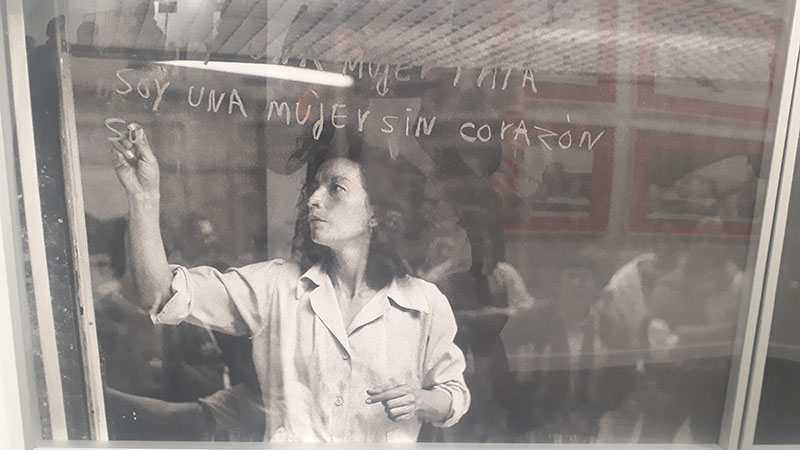
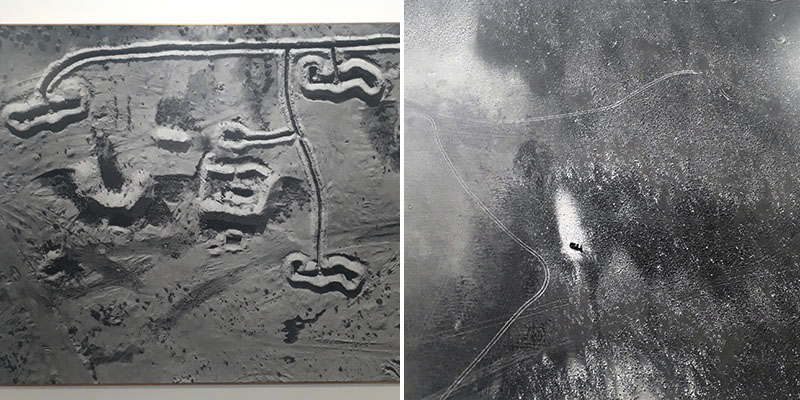
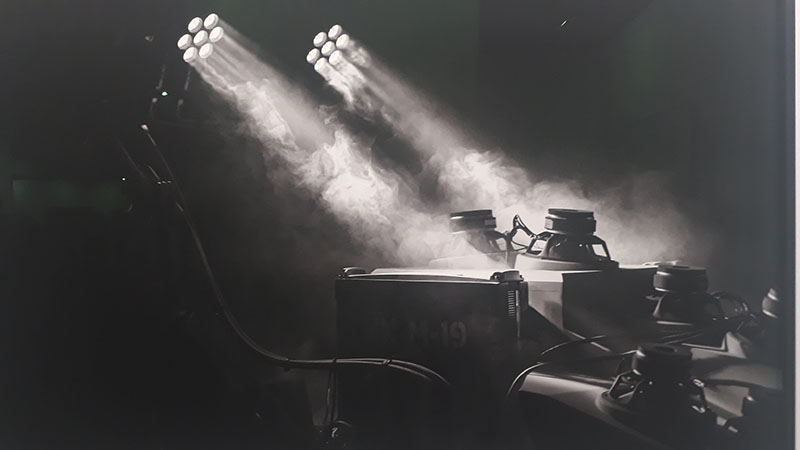
Photography has seen remarkable contributions this year with photos of Colombian performance artist Maria Teresa Hincapié (b. 1956) captured during her 8-hour performance at a Bogotá bookshop window in 1989; or of a peaceful coastal enclave by Michael Najjar (b. 1966) meant as a reflection on the drama of climate-induced rising sea levels. Other wonderful photos include the black and white aerial views of traces of the Golf War on the landscape by Sophie Ristehueber (b. 1949) and a photo of a massive sound sculpture by Nik Novak (b. 1981) on the use of sound as a weapon.

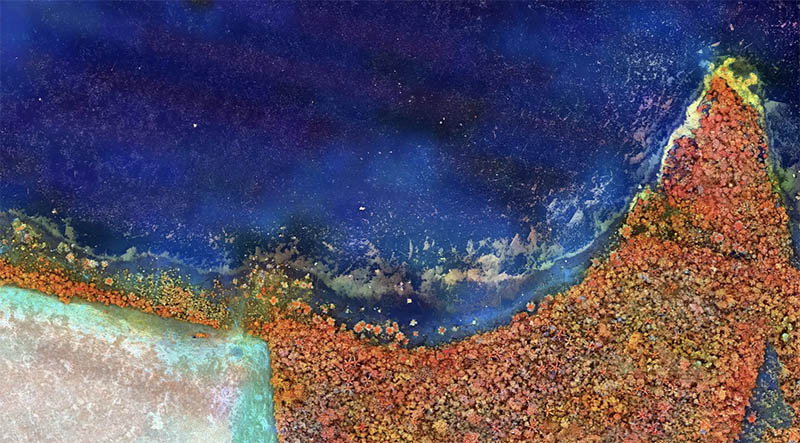
Submerged Forest, Rondônia, a photographic map by Richard Mosse (b. 1980) and part of his series Tristes Triptiques –named after Claude Lévi-Strauss's memoir with the same name– captures in a beautifully hued and light way the ecocide in the Brazilian Amazon. The drone-captured map shows land cleared for livestock feed crop cultivation (in turquoise in the picture below), forest flooding for hydropower projects (in dark blue) and forest die-back (in red).

Maria Teresa Hincapié, Vitrina, 1989-2020 | Galeria 1 Mira Madrid


Sophie Ristelhueber, Fait #61 and Fait #45, 1992 | Galerie Poggi Paris

Michael Najjar, Rising Seas, 2021 | Galería Juan Silio Santander

Nik Novak, The Mantis #3, 2019 | Alexander Levy Berlin

Richard Mosse, Submerged Forest, Rondônia, 2020 | Galería Carlier Gebauer Madrid

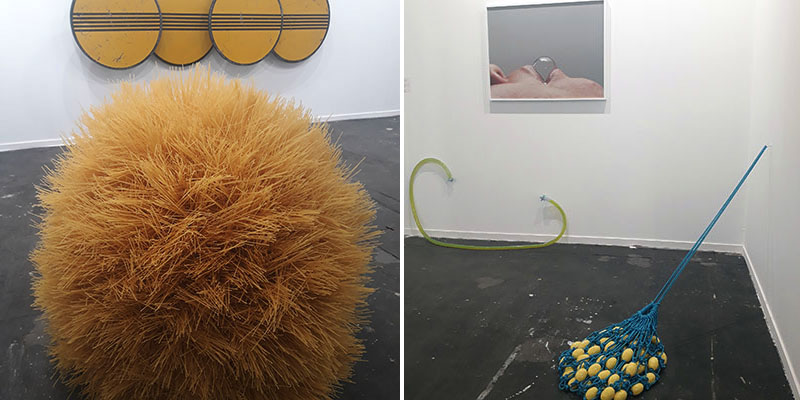
Interesting 3D artworks include Iman Issa's (b. 1979) serene wall sculptures with incongruent texts –like the one accompanying Self portrait that reads: Self as Alenka Zupančič who recounted the joke: "There are no cannibals here. We ate the last one yesterday"; Pasta, a spaghetti sphere by Victor Esther G (b. 1976); and the simple and bold objects by Jimena Kato (b. 1979).

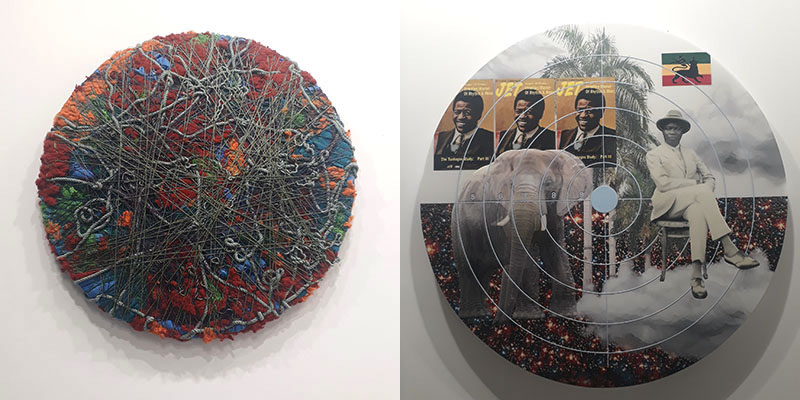
Bahamian artist Tavares Strachan (b. 1979) has exhibited a tondo that honours Kojo Tavalou Houénou, a 1920s prominent critic of the French colonialism in Africa, and is part of Strachan's work on finding invisible people of colour from history and reinserting them into a narrative. Sheila Hicks (b. 1934) has shown lovely wall-mounted textiles and Ángela de la Cruz (b. 1965), the London-based Turner Prize-nominee widely represented in the current ARCO edition, monochromatic deformed stretchers

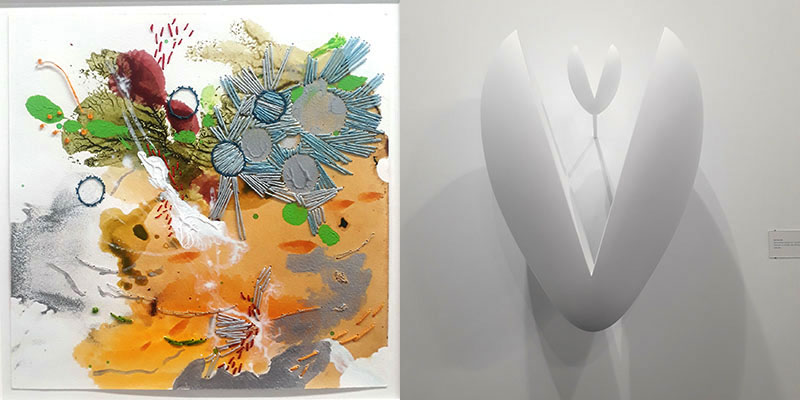
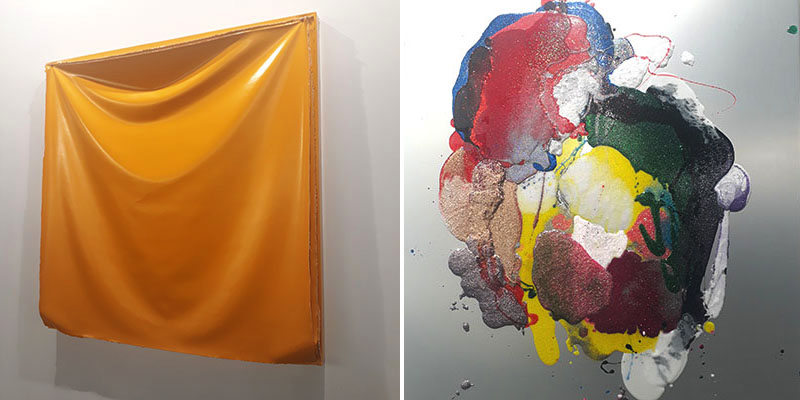
Among the 2D artworks stand Jessica Rankin's (b. 1971) embroidered painted landscapes and a glittering polyurethane on aluminium painting by the Brussel-based duo mentalKLINIK.


Jessica Rankin, Rain Dreamed from Sounds (THKC), 2021 & Iman Issa, Self portrait (Self as Alenka Zupančič), 2020 | Galería Carlier Gebauer Madrid

Sheila Hicks, Hyperion, 2021, Galerie Nächst St Stephan RS Vienna | Tavares Strachan, Kojo, 2021, Perrotin Paris

Victor Esther G, Pasta, 2021, Galería ATM Gijón | Jimena Kato, Untitled (Buble), 2019; Transfusion Syndrom #01, 2021; Dream Catcher, 2021, Rodriguez Gallery Poznan

Ángela de la Cruz, Loop L (Yellow), 2021, Thomas Schulte Berlin | mentalKLINIK, Disgustingly Awful Paintings 2102, 2021, Sabrina Amrani Madrid

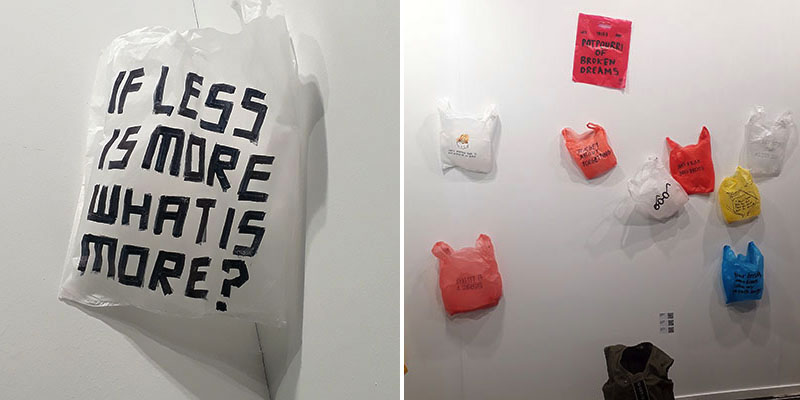
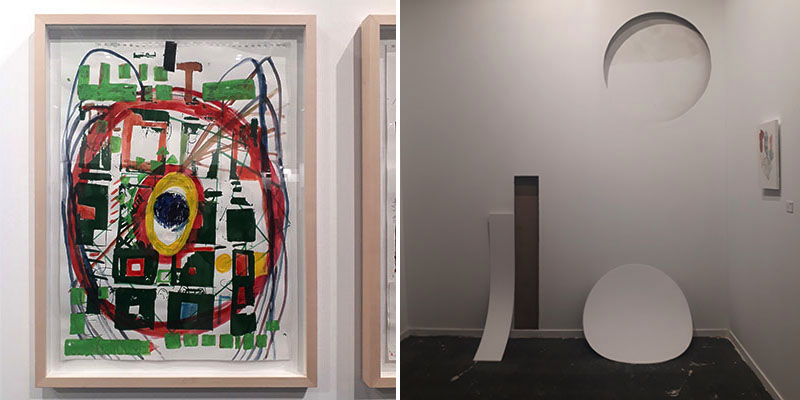
Opening, the curated programme for young galleries, has brought together 15 galleries from 10 countries. Highlights include the site-specific artwork by Rio de Janeiro artist Manoela Medeiros (b. 1991) who has applied her excavating practice to create two wall cut outs at the booth; Dritton Selmani's (b. 1987) use of plastic bags in Love Letters as a medium for writing deep reflections; and a series of patched sketches by fashion designer/artist Susan Cianciolo (b. 1969). Pristina-based Selmani views plastic bags not as disposable items but as ideal carriers of memorable reflections due to their ultra-long lifespan.


Driton Selmani, Love Letters, 2021 | Eugster Belgrade

Susan Cianciolo, I Saw the Circle, 2022, Cibrían San Sebastian | Manoela Medeiros, ARCO site specific installation, 2022, Double V Marseille

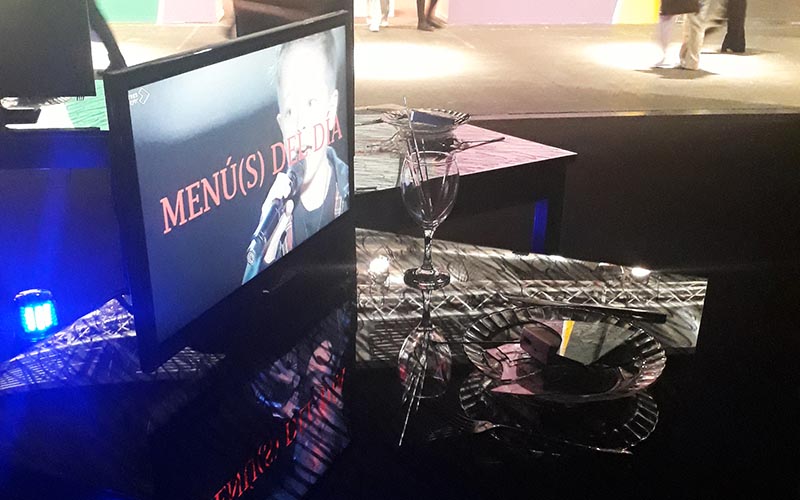
El País has commissioned this year Daily Menu(s), an installation by multimedia artist Concha Jerez (b. 1941) made with half a dozen tables arranged in a circle. Each table is set with tableware full of shards and a screen showing mediocre content. The artist reflects on random media consumerism but also on censorship in social media. 

Concha Jerez, Menú(s) de Día, 2022 | El País Space


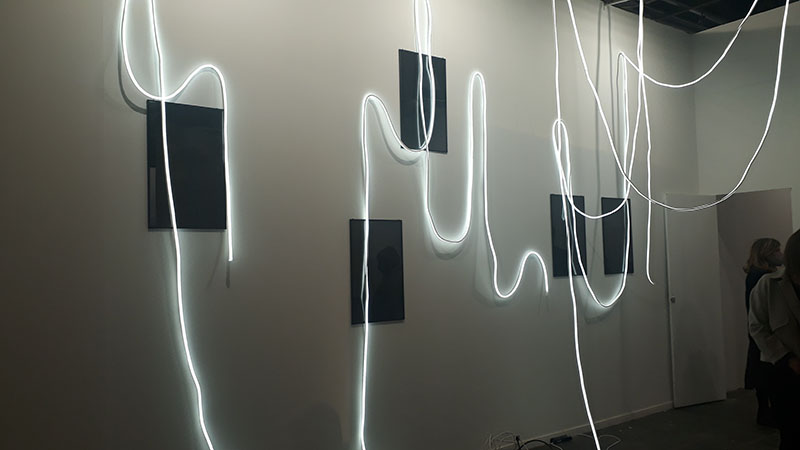
The commemorative section ARCO 40+1 partly happens around a space organised like a museum, with several tiny subspaces allocated to galleries that have somehow been central to the fair. Altogether 20 national and international galleries have contributed with artworks from the likes of Mario Merz and Mona Hatoum. The project description in paper made sense, yet the physical experience didn't quite match the script, at least for me. The gallery spaces were crammed, with exhibits hardly fitting in, and the artworks –although of great quality– felt randomly selected. In this context, Karin Sander's (b. l957) simple and uncluttered artwork made of fresh vegetables pointing at the passage of time (see cover picture), was doubly appreciated.

Lastly, superb short film presented by Daniel Canogar (b. 1964) at Forum –ARCO's space for talks and debates– on Dynamo, his installation for the Spanish Pavillion at the Expo Dubai 2020. The artwork is made of a continuous screen morphed into a giant intertwined loop and shows sensor-induced light compositions supported by matching sounds and ambient lighting. Canogar spoke about his fascination with the technological sublime and how the public's energy feeds Dynamo, his most significant artwork so far, he said.


Daniel Canogar, Dynamo (2021), Spanish Pavillion Expo Dubai 2020. Photo ©Studio Daniel Canogar
 

ARCOMadrid 2023 will include the programme "Mediterranean: A Round Sea" by curator Marina Fokidis with artists and galleries from surrounding countries.


About
ARCO International Contemporary Art Fair | Madrid, 23-27 February 2022
| IFEMA Madrid Halls 7 & 9 

Previous Articles 
 
Featured Artists
 
Photos
by PS unless otherwise stated. Cover picture Kitchen Pieces by Karin Sander at Helga de Alvear Gallery

Waste Management: An Overlooked Effective Tool to Cut Methane Emissions and Limit Global Warming. IPCC Report Review

August 17, 2021

Waste management, as a policy, brings the complementary emissions reductions required to reduce global warming, says the Intergovernmental Panel on Climate Change's new report (IPCC AR6 WGI) released on August 9. The statement is a huge step towards reducing emissions and a major departure from previous IPCC reports.


The waste sector emits methane (CH4), a potent greenhouse gas (GHG), through the decomposition of waste in dumps and landfills. While 82 times stronger than carbon dioxide (C02) after 20 years, for being a short-lived gas, methane was incorrectly thought to have a marginal role in global warming. Solutions reducing short-lived gases, such as effective waste management, have not been viewed as critical to mitigate climate change as solutions that reduce long-lived greenhouse gases. That all changed with the recent IPCC Report that places equal importance on limiting long- and short-lived GHGs, including methane.


GHGs effect on global warming - ten years sooner than expected

The new 4,000-page IPCC report breaks the news that human influence on the climate system is now an established fact and that a global temperature increase of 1.5ºC is likely to be reached in the early 2030s, ten years earlier than previously assessed. This reduced timetable factors in an increased concentration of emissions from human activities that more quickly accelerates global warming by creating a GHG effect that traps excess energy (see Figure 1).


According to the IPCC, global warming is responsible for changes in the climate system, such as "increases in the frequency and intensity of hot extremes, marine heatwaves and heavy precipitation, agricultural and ecological droughts in some regions, and proportion of intense tropical cyclones, as well as reductions in Arctic sea ice, snow cover and permafrost" (IPCC AR6 WGI, page 20. Fig. 2). 


Figure 1. The Earth's energy budget and energy loss / IPCC AR6 WGI, p. 1816 / Graphic by IPCC

Figure 2. Possible climate futures

The importance of near-term time scales & short-lived GHGs in limiting global warming

The IPCC has adamantly stated that reducing emissions is essential to limit global warming and stabilise climate systems. It has, however, focused its attention on reducing emissions with long-term effects on climate, such as CO2, as recommended by long-term time scales.


For scientists in creating their forecast models, metrics and time scales matter when it comes to understanding the effect of a GHG. There are several metrics and time scales. Global Air Temperature Change, for instance, measured over a 100-year period is largely affected by CO2, while in a period of 10 years methane plays a significant role in temperature change (fig. 3). Although 100-year time scales have been most prominently used in previous climate assessments, the new IPCC report leaves it to policymakers to decide which time scale - and emission metric - is most applicable to their needs.  


The IPCC report’s invitation to use near-term time scales closely relates to short-lived GHGs or Short-lived Climate Forcers (SLCFs), the GHG group that mostly affects climate over a 10- to 20-year period.


It has taken scientists a while to understand the effects of SCLFs on climate. Previous science thought that SLCFs’ reductions lead to disbenefits for near-term climate change, because aerosols, a SLCF gas, have cooling effects and were believed to drive the overall effect of SLCFs as a multigas. This is no longer the case and the new IPCC report confirms that changes in SLCFs will very likely cause further warming in the next two decades, and that the influence of SLCFs on global temperature is at least as large as that of CO2 (IPCC AR6 WGI, p. 110). 


This is an important statement. It means that a previously underrated GHG group has been pointed up as key to limiting warming to 1.5ºC in the near term. And this is where the IPCC report identifies waste management’s increased role in global warming mitigation, through its effectiveness in reducing methane, the main contributor to SLCFs.


SLCFs affect climate and are, in most cases, also air pollutants. They include aerosols, which are also called particulate matter (PM), and chemically reactive gases (methane, ozone, some halogenated compounds, nitrogen oxides, carbon monoxide, non-methane volatile organic compounds, sulphur dioxide and ammonia). Except for methane and some halogenated compounds whose lifetimes are about a decade or more, SLCFs only persist in the atmosphere from a few hours to a couple of months." (IPCC AR6 WGI, p. 1429) 

Until the 1950s, the majority of SLCFs emissions originated from North America and Europe. Since the 1990s more than 50% of anthropogenic SLCFs originate from Asia.


Figure 3. Global surface temperature change 10 and 100 years after a one year pulse of present day emissions / IPCC AR6 WGI, p. 178 / Graph by IPCC

Waste management is essential to cut methane emissions

Methane is a powerful short-lived gas that stays in the atmosphere for 12 years. Its global warming potential is highest when the gas enters the atmosphere and sharply declines with time. Methane is so powerful that after 20 years its warming potential is still 82 times greater than carbon dioxide’s (IPCC AR6 WGI, p. 1739).  


Methane emissions are growing since 2007 at a growth rate of 7 +/- 3 ppb per year. With an effective radiating forcing (ERF) of 0.54 Wm-2, methane has an attributed contribution to global mean surface air temperature (GSAT) of +0.3ºC (IPCC AR6 WGI, p. 1798).

The main sources of anthropogenic methane are agriculture (livestock production and rice cultivation), fossil fuel production and distribution, waste decomposition in landfills and dumps, and biomass burning (fig. 4).  

The waste sector generates 55-77 Tg of CH4 emissions per year, that is, 18% of global anthropogenic methane emissions, a large enough share to help limit global warming if they were to be avoided.

Although the agricultural and fossil fuel sectors offer the largest mitigation potential, they aren’t quite there with full-fledged, viable solutions to cut emissions. The agricultural sector hasn't got a large-scale alternative to the high-polluting meat industry, and the fossil fuel sector needs massive investments that aren't available due to divestment policies. The waste sector, on the contrary, has already proven practices and technologies in place to cut its methane emissions. Practices such as waste management in combination with energy recovery and recycling can end landfills and dumps the sector main emitters slash methane emissions, and positively impact climate stabilisation with the co-benefit of improved air quality.

In sum, by phasing out landfill and dumps, the world has a way to reduce methane emissions, which the IPCC report clearly says will lessen the newly-revised – negative – impact of SLCFs and help limit global warming to 1.5ºC.

Figure 4. Data by IPCC AR6 WGI, Table 5.2, p. 1189 / Graphic by PS
 
 
by Patricia Sendin, founding partner at Frontline Waste.
 
 
Copyright © Not Only About Architecture: Art, Land, Climate